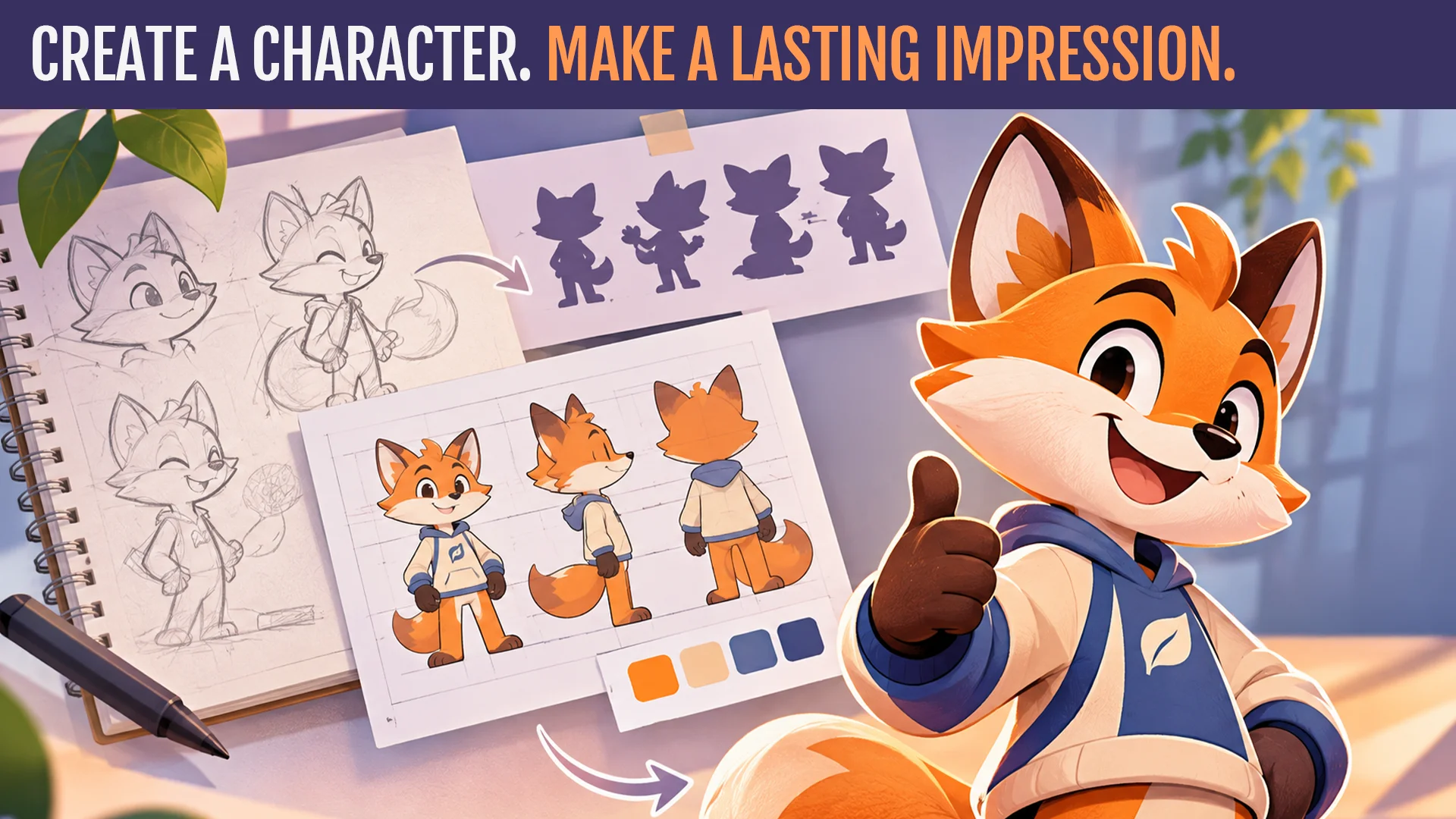
Brand mascot creation: the method for a professional character
A mascot frozen on a logo is only doing half its job. As soon as it moves, blinks or reacts, it becomes a character people recognise, look forward to and share.
But it has to be designed for that. A professional mascot is not a nice illustration: it is a character built to move, to be adapted and to last. This article sets out the method for creating a brand mascot, from the strategic brief to the delivered files.
Research for the creation of a professional brand mascot
Why a brand mascot works
A mascot gives a brand a face, and a face is easier to remember than a logo or a slogan. Michelin’s Bibendum has been with the brand since 1898: few marketing assets last that long.
It brings three concrete benefits:
- Recognition. A silhouette is enough to identify the brand, even without a logo or a name.
- Emotion. A character can be funny, reassuring or friendly, where brand messaging stays abstract.
- Versatility. The same character works in advertising, on social networks, in an app, on a booth or on packaging.
Animation multiplies these effects. Video formats dominate social networks, and an animated character naturally finds its place there.
Creating a professional mascot: the 6 steps
A professional mascot is designed from the start to move and to last. That is what sets it apart from a simple illustration.
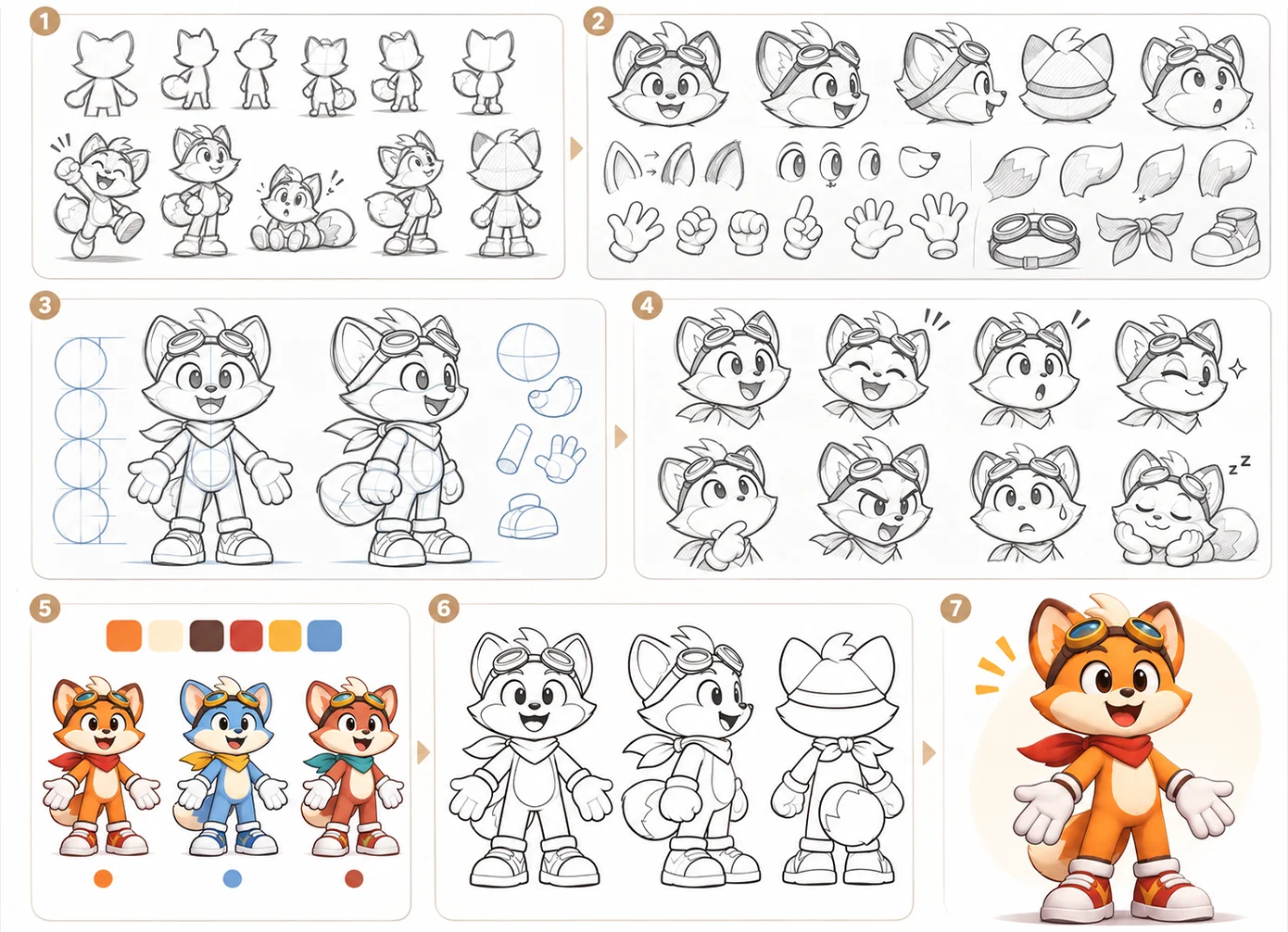
- The strategic brief. Before the first sketch, we define the target audience, the brand values, the tone and the planned media. A mascot for a fintech does not speak like one for a cereal brand.
- The personality. We write the character before drawing it: its temperament, its strengths, its flaws, its way of expressing itself. This profile will guide every future animation.
- The graphic exploration. Several directions are explored: animal, object, human, abstract creature. The decisive test is the silhouette, which must stay readable in black and at a very small size.
- The final design. The chosen direction is refined: proportions, colours aligned with the brand guidelines, level of detail. The fewer the details, the more easily the character animates.
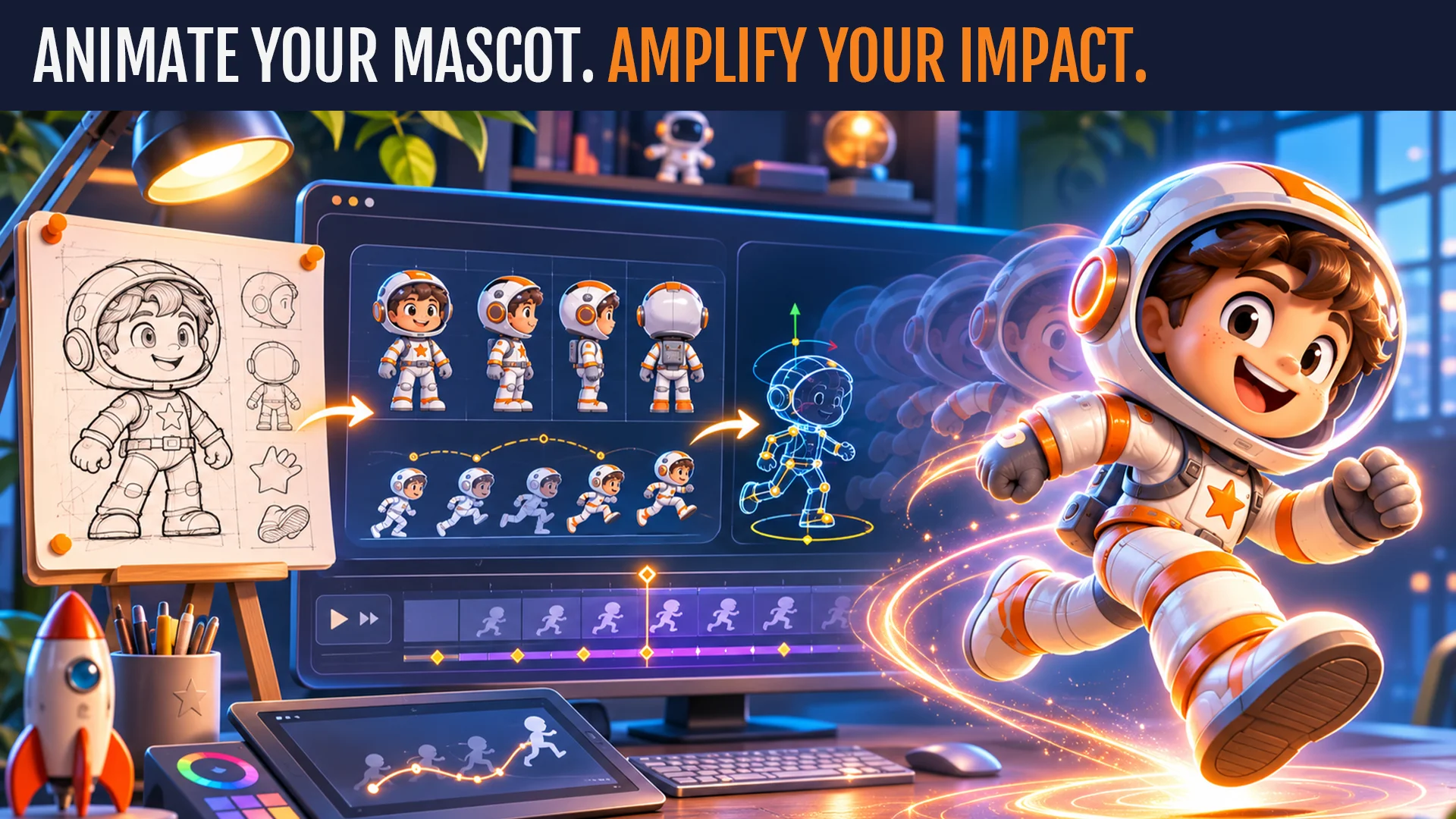
- The model sheet. The character is drawn from the front, in profile, in three-quarter view and from behind, with its expressions and key poses. This document guarantees consistency, whoever produces the work.
- The usage guidelines. They specify what the mascot does and never does, its minimum sizes, its approved backgrounds and its variations.
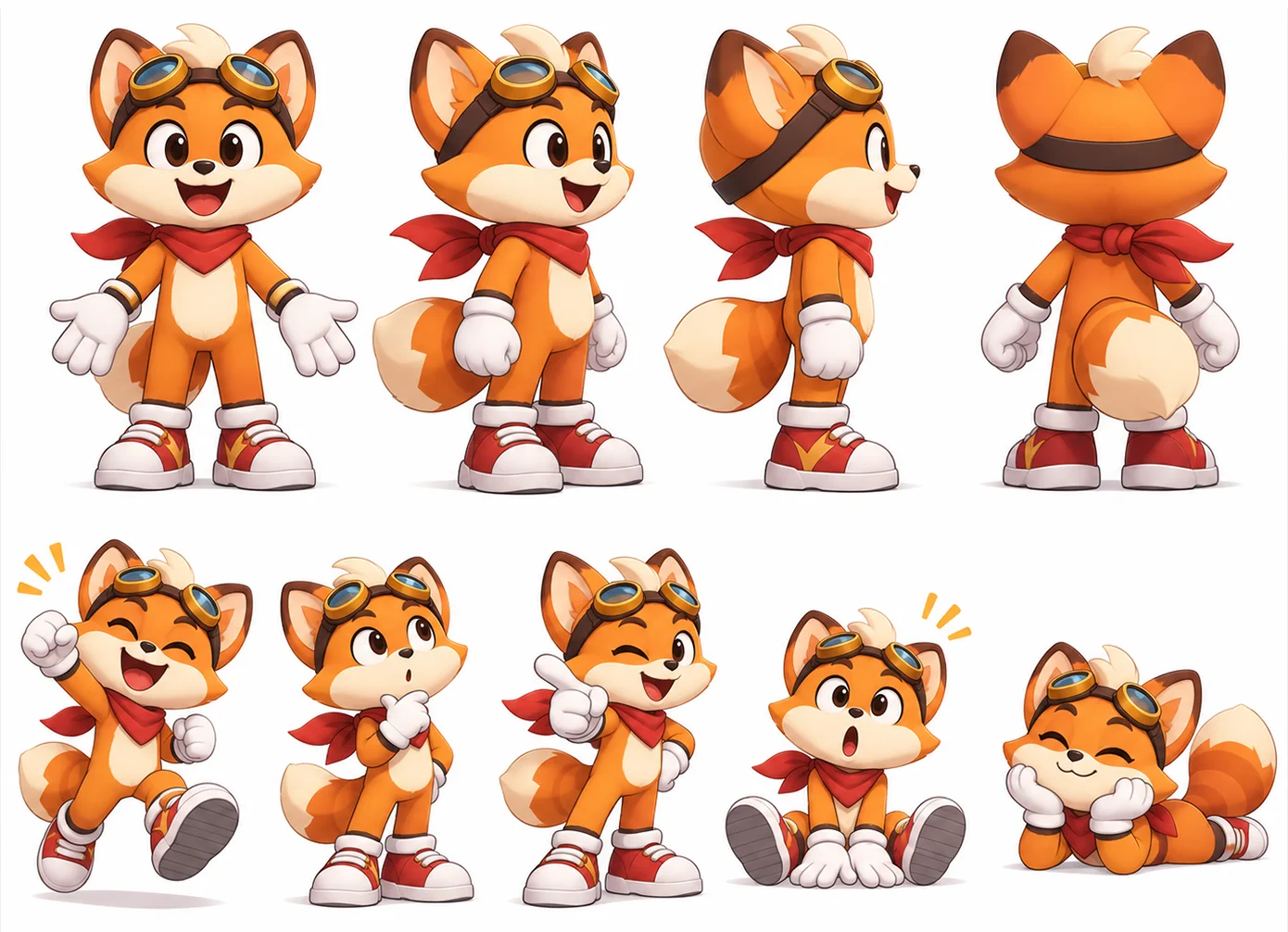
The model sheet brings together the mascot’s views, expressions and key poses
One legal point to settle as soon as the work is commissioned: the assignment of copyright. It must cover animation, adaptation and every planned medium. Registering the character can also be discussed with an intellectual property adviser.
Files delivered in high definition
Final files are supplied at a resolution suited to high-definition printing and 4K renders. Your mascot stays sharp on every medium, from a business card to a giant screen.
- For print: high-definition visuals (300 dpi) and vector files, scalable without loss for posters, packaging or point-of-sale displays.
- For video: animations rendered in 4K (3840 × 2160 px), then adapted to the lighter formats used on social networks and the web.
2D, 3D or AI: which technique to choose
The choice depends on the target media, the planned volume of content and the budget, not on a trend. The three approaches are often combined.
| Technique | Strengths | Limits | Best for |
|---|---|---|---|
| 2D motion design | Fast production, lightweight files, clean graphic style | Limited camera angles | Social networks, website, app, stickers |
| 3D animation | Every angle, volume, premium look, reusable in AR or at events | Longer and more costly setup | Video advertising, brand films, giant screens |
| AI-generated video | Speed, variety of settings and situations, lower costs on large volumes | Character consistency to be checked shot by shot | Frequent social content, creative tests, animated storyboards |
Generative AI speeds up production considerably, on one condition: starting from solid references. A precise model sheet and a well-defined character deliver consistent results. Without them, the mascot’s face changes from one shot to the next.
Our approach at Interactive Studio is hybrid. Design and art direction stay in the hands of creatives, AI is used to produce faster and at greater scale, then every shot is checked and retouched.
Where to bring your animated mascot to life
An animated mascot pays off through the number of touchpoints where it appears. The most effective ones:
- Social networks: short formats, reactions to current events, recurring series.
- Promotional videos: the mascot presents the product or stands in for the customer.
- Website and app: loading screens, 404 pages, onboarding, success messages.
- Messaging: stickers and GIFs that customers share themselves.
- Events and retail: booth screens, kiosks, animated shop windows.
- Internal communication: training, team onboarding, HR messages.
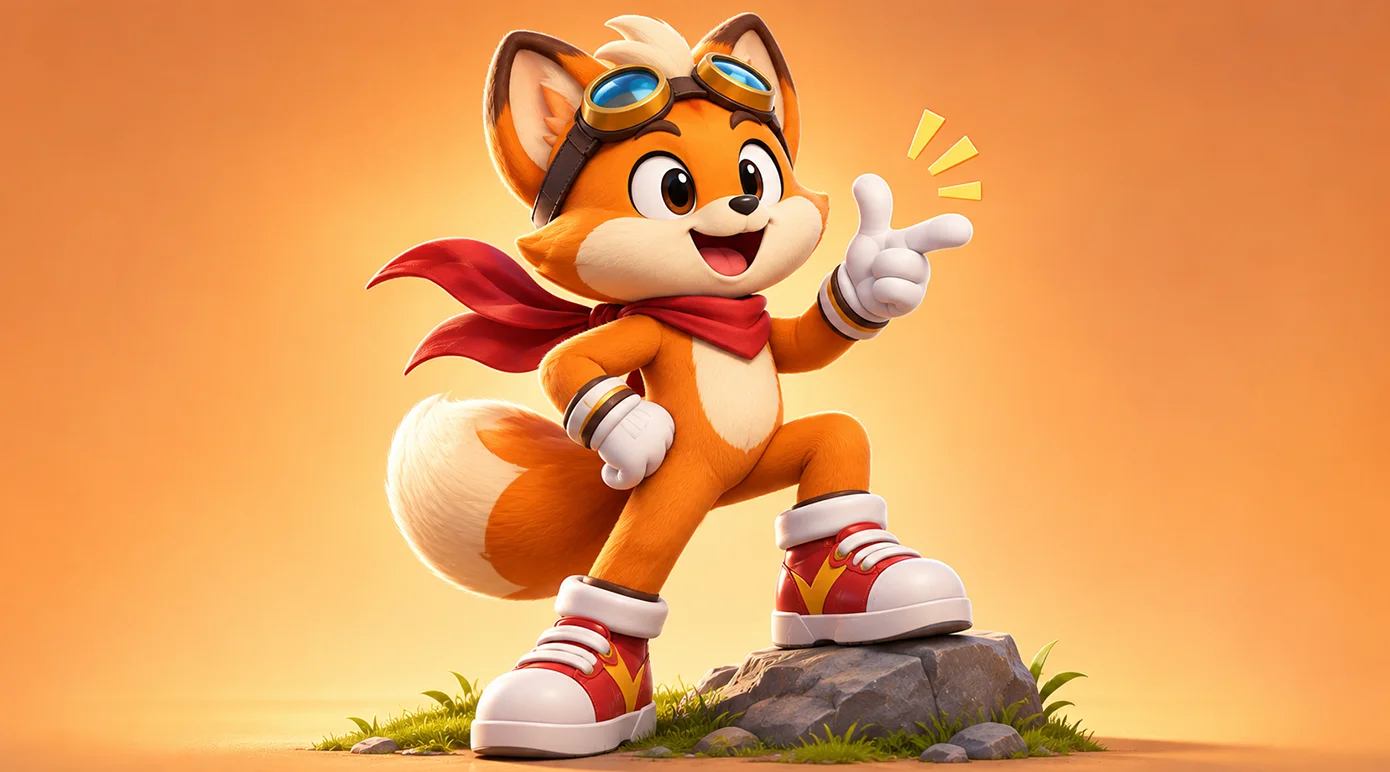
5 mistakes to avoid
- Drawing without thinking about movement. An overly detailed design is costly for every second of animation.
- Forgetting the personality. Without a defined character, the mascot moves but tells no story.
- Copying a well-known mascot. A character too close to another exposes the brand to legal risk and blurs its identity.
- Neglecting the rights. A rights assignment that does not cover animation blocks the project at the worst moment.
- Delivering a single visual. Without a model sheet or variations, every new medium starts from scratch.
Frequently asked questions about mascot creation
Should animation be planned from the creation stage?
Yes. A design built for movement from the start avoids having to rework it later. Even if animation is not planned right away, the model sheet makes it possible at any time.
Should you choose 2D or 3D?
2D is enough for social networks, the web and apps. 3D makes sense for video advertising, brand films and uses where the character must be seen from every angle.
Can AI create my mascot on its own?
No, not at a professional level. AI speeds up the exploration of ideas, but originality, consistency with the brand and legal safety require human art direction.
What budget should you plan for?
The budget mainly depends on the technique chosen, the number of views and expressions, and the planned variations.
Create your brand’s mascot
A well-designed mascot becomes a brand asset that serves for years. The method comes down to three points: a defined character, a design built for movement, and rights and files in order. At Interactive Studio, we create mascots in 2D, in 3D and with AI. Tell us about your brand: we will suggest character directions.
Does your mascot already exist? Read our guide to animating an existing brand mascot.
Do you have a mascot project for your brand?